Who among us has bought a gift for a grandchild -- or any loved one, for that matter -- and not pondered the profound unfairness of not being able to count it as a tax deduction? It's galling. Forget that private equity managers only pay a 15% tax rate on the majority of their income -- this is the real injustice in our tax code.
Anyone who found themselves nodding at the above might have a future writing for the Wall Street Journal editorial page. The conservative temper tantrum over Warren Buffett's call for higher effective tax rates on the rich reached its apotheosis with the totally specious argument that taxes had actually increased on the wealthy in the last decade; the latest effort in the Wall Street Journal by former American Express CEO Harvey Golub is merely the least persuasive entry in this genre.
The usual canards get recycled fairly quickly. Golub begins with the de rigueur conservative talking point that Buffett should just pay higher taxes himself if he thinks his taxes are too low (which, of course, ignores Buffett's point about the broader unfairness of the loopholes that let the super-rich pay less as a percentage of their income than the middle class does).
This whirlwind tour of hackery makes its next stop at the Wall Street Journal's preferred three-card monte tax argument: that only those who pay federal income taxes have a "stake" in how the government spends money. It is certainly true that nearly half of all taxpayers do not pay federal income tax -- but that is only because this "lucky" majority is too poor to afford to pay much more after accounting for state, local and payroll taxes. Consider that in 2009 -- the last year before the temporary payroll tax cut -- that Social Security taxes raised 97% of the revenue that federal incomes taxes did. And the payroll tax is regressive. Indeed, is it fair that Warren Buffett pays exactly the same amount in payroll taxes as someone making $120,000 does?
Golub concludes with a rant against an assortment of spending programs, tax expenditures and some true head-scratchers (such as the aforementioned lament that donations to charities are tax deductible, but gifts to grandchildren are not). None of this vitiates Buffett's argument that the super-rich are "coddled" when it comes to taxes. Nor is it persuasive on its own merits. Golub's argument that his taxes should not go up until programs he disapproves of are eliminated or made more efficient is a weak dodge. Imagine the democratic dysfunction such a rule would invite if adopted as a categorical imperative.
Is this really the best the Wall Street Journal can do?
Showing posts with label taxes. Show all posts
Showing posts with label taxes. Show all posts
Wednesday, August 24, 2011

Friday, August 19, 2011
The Most Specious Tax Argument Ever
Conservatives are in a tizzy because Warren Buffett had the temerity to once again suggest that he should pay a higher percentage of his income in taxes than his secretary does. The gall!
The GOP response has been as predictable as it is unpersuasive: Buffett is a hypocrite for not promoting a wealth tax instead, and just wants to keep the merely rich from reaching his status; the armies of lawyers and accountants the super-rich employ will insulate them from any tax hikes; and, if Buffett wants to pay higher taxes, why not just do it himself?
But Investors Business Daily wins the award for chutzpah with their Orwellian argument that the tax burden for top earners has actually increased in the last decade:
Let's inject some facts into this debate, courtesy of Emmanuel Saez. In 2001, the top 0.1% of earners accounted for 8.37% of all income and took home an average of $4.58 million (in 2008 dollars); in 2008 the top 0.1% of earners accounted for 10.4% of all income and took home an average of $5.65 million (in 2008 dollars). That amounts to a 23% increase in real incomes over eight years. What explains this prodigious jump? The top 0.1% of earners derive a large proportion of their income from capital gains, so they are more sensitive than most to the markets. In other words, their incomes are more pro-cyclical than those of a typical worker. The tech bubble wiped out a large chunk of wealth for the top 0.1% in 2001, which the housing bubble promptly restored in 2008 (tax returns for 2008 came in before Lehman went bust, so even though markets were off their October 2007 highs, they had not fallen too far).
It gets worse. The price level increased roughly 20% between 2001 and 2008. Factoring that rise in with the 23% bump in real incomes for the top 0.1% gives them a 48% increase in nominal incomes over the period. Remember how the top 0.1% paying 33% more in taxes in 2008 than in 2001 was supposed to prove how they hadn't been "coddled"? Oops. The same, of course, applies to the top 400 tax filers. The IRS data clearly shows that the effective tax rate for the top 400 filers fell significantly between 2001 and 2008.
Investors Business Daily does manage to get one fact right. The share of federal incomes taxes paid by the rich has increased since the Bush tax cuts became law. But that merely reflects the reality that increasing numbers of households are simply too poor to pay much after accounting for state, local and payroll taxes -- the last of which is regressive and raised 97% of the revenue that federal income taxes did in 2009.
Conservatives react to the undeniable reality that the richest members of our society benefit from egregious loopholes like carried interest with the equivalent of a temper tantrum. They know the wealthy are taxed too much, facts be damned! No, increasing taxes on the super-rich will not come close to filling our structural deficit, but it would not be insignificant either: perhaps $1 trillion over a decade. And it would go a long way towards reducing the blatant unfairness in our tax code.
The most specious tax argument ever does not change this.
The GOP response has been as predictable as it is unpersuasive: Buffett is a hypocrite for not promoting a wealth tax instead, and just wants to keep the merely rich from reaching his status; the armies of lawyers and accountants the super-rich employ will insulate them from any tax hikes; and, if Buffett wants to pay higher taxes, why not just do it himself?
But Investors Business Daily wins the award for chutzpah with their Orwellian argument that the tax burden for top earners has actually increased in the last decade:
Nor is it true, as Buffett claims, that the rich have been "coddled." Indeed, the top 0.1% of income earners — the millionaires and billionaires Buffett says have made out like bandits — paid a third more in federal income taxes in 2008 than they did in 2001.
The richest 400 paid almost two-thirds more. And the share of federal income taxes paid by the rich climbed after the Bush tax cuts went into effect.There's a lot of dishonesty to unpack here. First, comparing absolute tax returns -- the metric they cite -- is essentially meaningless. The reductio ad absurdum version of this argument is that since the richest 0.1% paid more in taxes in nominal dollars in 2008 than they did in 1954 -- when top marginal rates were 91% -- that the rich are taxed more heavily now than then. Clearly, this tells us nothing. Between inflation and rising real incomes (at least for the top of the income distribution) this is what we would expect; higher nominal incomes should translate to higher nominal tax returns. The same is true for the 2008 versus 2001 comparison, albeit to a much lesser degree.
Let's inject some facts into this debate, courtesy of Emmanuel Saez. In 2001, the top 0.1% of earners accounted for 8.37% of all income and took home an average of $4.58 million (in 2008 dollars); in 2008 the top 0.1% of earners accounted for 10.4% of all income and took home an average of $5.65 million (in 2008 dollars). That amounts to a 23% increase in real incomes over eight years. What explains this prodigious jump? The top 0.1% of earners derive a large proportion of their income from capital gains, so they are more sensitive than most to the markets. In other words, their incomes are more pro-cyclical than those of a typical worker. The tech bubble wiped out a large chunk of wealth for the top 0.1% in 2001, which the housing bubble promptly restored in 2008 (tax returns for 2008 came in before Lehman went bust, so even though markets were off their October 2007 highs, they had not fallen too far).
It gets worse. The price level increased roughly 20% between 2001 and 2008. Factoring that rise in with the 23% bump in real incomes for the top 0.1% gives them a 48% increase in nominal incomes over the period. Remember how the top 0.1% paying 33% more in taxes in 2008 than in 2001 was supposed to prove how they hadn't been "coddled"? Oops. The same, of course, applies to the top 400 tax filers. The IRS data clearly shows that the effective tax rate for the top 400 filers fell significantly between 2001 and 2008.
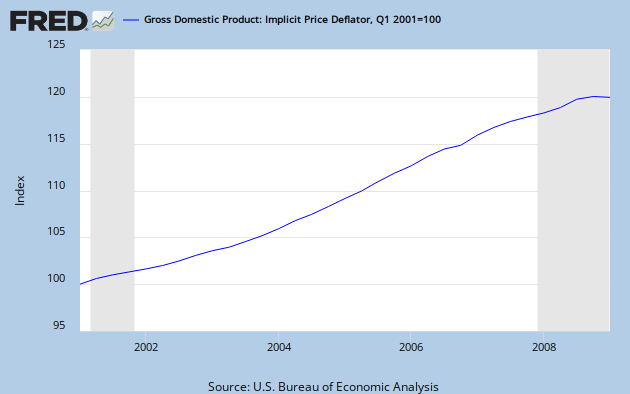
Investors Business Daily does manage to get one fact right. The share of federal incomes taxes paid by the rich has increased since the Bush tax cuts became law. But that merely reflects the reality that increasing numbers of households are simply too poor to pay much after accounting for state, local and payroll taxes -- the last of which is regressive and raised 97% of the revenue that federal income taxes did in 2009.
Conservatives react to the undeniable reality that the richest members of our society benefit from egregious loopholes like carried interest with the equivalent of a temper tantrum. They know the wealthy are taxed too much, facts be damned! No, increasing taxes on the super-rich will not come close to filling our structural deficit, but it would not be insignificant either: perhaps $1 trillion over a decade. And it would go a long way towards reducing the blatant unfairness in our tax code.
The most specious tax argument ever does not change this.
Wednesday, August 3, 2011
Democrats In Denial
When it comes to President Obama, liberals can't seem to get past the first stage of grief. It's one part cognitive dissonance, another part rationalization.
Liberals look at Obama and see an incontrovertibly intelligent man. And yet, he seems unable to discern the most basic political realities -- obviously a problem for a politician. Indeed, this latest exercise in Republican hostage-taking was so predictable -- to everyone but the White House, that is -- that reporter Marc Ambinder predicted it last December. At the time, Ambinder asked Obama why he had not included a debt ceiling increase in the agreement to extend the Bush tax cuts, given that the GOP would undoubtedly use the debt ceiling as leverage to extract future cuts. Obama was oblivious.
What is going on here? After all, it's no secret that the Republicans have just two overarching goals: 1) knee-capping Obama's presidency, and 2) keeping taxes on the rich low. The GOP has been quite explicit about both these aims. How could Republican intransigence still be such a shock to Obama after two and a half years of unprecedented obstructionism and extortion? Liberals alternate between hoping that Obama's weak negotiating is either some kind of still obscure rope-a-dope scheme -- "jujitsu" or "11-dimensional chess" -- or that he will finally draw the proverbial line in the sand and stand up to the Republicans.
The truth is more depressing. The only principle Obama is unwilling to compromise on is compromise itself. He values process over policy. This pose as the most reasonable man in the room might not be a problem if the other side was negotiating in good faith. They are not. Rather, their midterm rout has emboldened the GOP to take hostages. They threaten economic ruin unless their policy demands are met. And they keep doing so for a simple reason: it has worked thus far.
This is where rationalization comes in. Taken individually, none of the deals the Republicans have dictated to Obama have been that bad. The Bush tax cuts extension included a dose of stimulus in a payroll tax holiday and extended unemployment insurance. The threat of a government shutdown in April did not lead to draconian spending cuts. Neither did the brouhaha over the debt ceiling: $21 billion in FY2012 cuts will not affect Obama's electoral fate. It could have been much worse (how's that for a re-election slogan?). But that completely misses the point.
The GOP strategy is cuts by a thousand cuts. Each time they take a hostage, the Republicans wrest modest enough concessions that the Democrats give in rather than risk economic calamity over such relatively small stakes. Insofar as chipping away at the deficit has burnished Obama's centrist credentials, there's a defensible argument that he is winning the -- wait for it! -- future by mollifying independents on spending. Messaging trumps policy, too. Again, a rationalization. The reality is that the economy is far, far more important than political framing. James Carville had it right. Even an overgenerous interpretation of these deals as tactical victories for Obama adds up to a strategic defeat. The Republicans have taken stimulus off the table -- and Obama can't even blame them for it, given his cooperation and pro-austerity rhetoric. A belated "pivot" towards jobs, which Obama laughably thinks could pass the House, would hardly make a dent in our jobs crisis even if it somehow did get enough Republican support.
Still, liberals hope. They have already turned their attention to what figures to be the next political brawl: the expiration of the Bush tax cuts in late 2012. The New Republic's Jonathan Chait has been pounding the table for Obama to call the GOP's bluff, and veto any bill that keeps the Bush tax cuts for incomes above $250,000. This is politics worthy of the jujitsu moniker. It simultaneously places the blame for a middle class tax hike on the Republicans, while raising the revenue necessary to keep Social Security and Medicare close to their current forms. So, does Chait expect Obama to adopt this strategy?
Democrats need to realize Obama cares more about appeasing the Washington Post editorial board than he does his own base. Instead of hoping that he will become the politician they want him to be, they should try to pressure him to do so. It's time to recognize he's not the one we were waiting for.
Liberals look at Obama and see an incontrovertibly intelligent man. And yet, he seems unable to discern the most basic political realities -- obviously a problem for a politician. Indeed, this latest exercise in Republican hostage-taking was so predictable -- to everyone but the White House, that is -- that reporter Marc Ambinder predicted it last December. At the time, Ambinder asked Obama why he had not included a debt ceiling increase in the agreement to extend the Bush tax cuts, given that the GOP would undoubtedly use the debt ceiling as leverage to extract future cuts. Obama was oblivious.
What is going on here? After all, it's no secret that the Republicans have just two overarching goals: 1) knee-capping Obama's presidency, and 2) keeping taxes on the rich low. The GOP has been quite explicit about both these aims. How could Republican intransigence still be such a shock to Obama after two and a half years of unprecedented obstructionism and extortion? Liberals alternate between hoping that Obama's weak negotiating is either some kind of still obscure rope-a-dope scheme -- "jujitsu" or "11-dimensional chess" -- or that he will finally draw the proverbial line in the sand and stand up to the Republicans.
The truth is more depressing. The only principle Obama is unwilling to compromise on is compromise itself. He values process over policy. This pose as the most reasonable man in the room might not be a problem if the other side was negotiating in good faith. They are not. Rather, their midterm rout has emboldened the GOP to take hostages. They threaten economic ruin unless their policy demands are met. And they keep doing so for a simple reason: it has worked thus far.
This is where rationalization comes in. Taken individually, none of the deals the Republicans have dictated to Obama have been that bad. The Bush tax cuts extension included a dose of stimulus in a payroll tax holiday and extended unemployment insurance. The threat of a government shutdown in April did not lead to draconian spending cuts. Neither did the brouhaha over the debt ceiling: $21 billion in FY2012 cuts will not affect Obama's electoral fate. It could have been much worse (how's that for a re-election slogan?). But that completely misses the point.
The GOP strategy is cuts by a thousand cuts. Each time they take a hostage, the Republicans wrest modest enough concessions that the Democrats give in rather than risk economic calamity over such relatively small stakes. Insofar as chipping away at the deficit has burnished Obama's centrist credentials, there's a defensible argument that he is winning the -- wait for it! -- future by mollifying independents on spending. Messaging trumps policy, too. Again, a rationalization. The reality is that the economy is far, far more important than political framing. James Carville had it right. Even an overgenerous interpretation of these deals as tactical victories for Obama adds up to a strategic defeat. The Republicans have taken stimulus off the table -- and Obama can't even blame them for it, given his cooperation and pro-austerity rhetoric. A belated "pivot" towards jobs, which Obama laughably thinks could pass the House, would hardly make a dent in our jobs crisis even if it somehow did get enough Republican support.
Still, liberals hope. They have already turned their attention to what figures to be the next political brawl: the expiration of the Bush tax cuts in late 2012. The New Republic's Jonathan Chait has been pounding the table for Obama to call the GOP's bluff, and veto any bill that keeps the Bush tax cuts for incomes above $250,000. This is politics worthy of the jujitsu moniker. It simultaneously places the blame for a middle class tax hike on the Republicans, while raising the revenue necessary to keep Social Security and Medicare close to their current forms. So, does Chait expect Obama to adopt this strategy?
The problem, though, is that we can't be sure Obama really intends to draw that line. There's a limit to how much faith one can place in a man who has so badly misjudged his political opponents time and time again. The debt ceiling ransom may be a shrewd strategic retreat, or it may be the largest in a series of historic capitulations. We won't know until the fight over the Bush tax cuts has been settled.Unfortunately, we likely already know. Indeed, Obama's abortive attempts at a "grand bargain" during the debt ceiling negotiations included offers of tax reform, i.e. lowering rates and closing loopholes. It's certainly true that this offer was made in the context of larger negotiations, but Treasury Secretary Tim Geithner's recent op-ed still endorsing the idea should erase all doubt about the administration's intentions.
Democrats need to realize Obama cares more about appeasing the Washington Post editorial board than he does his own base. Instead of hoping that he will become the politician they want him to be, they should try to pressure him to do so. It's time to recognize he's not the one we were waiting for.
Subscribe to:
Posts (Atom)